Evaluating the Halloween Vampire Kid 3D Shadow Box for Creative Projects
As the Halloween season approaches, creators and small business owners often face the challenge of sourcing decor that stands out in a saturated market. The standard plastic skeletons and mass-produced ghosts have become ubiquitous, leading many to seek more artisanal, customizable options. This is where digital assets like the Halloween Vampire Kid 3D Shadow Box design enter the conversation. Rather than relying on pre-made store-bought items, this resource offers a layered paper-cut template designed to be fabricated by the user. It represents a shift from passive consumption to active creation, appealing to those who value uniqueness and hands-on craftsmanship in their seasonal decorations.
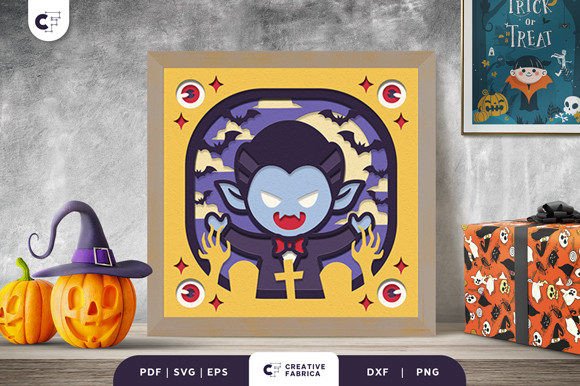
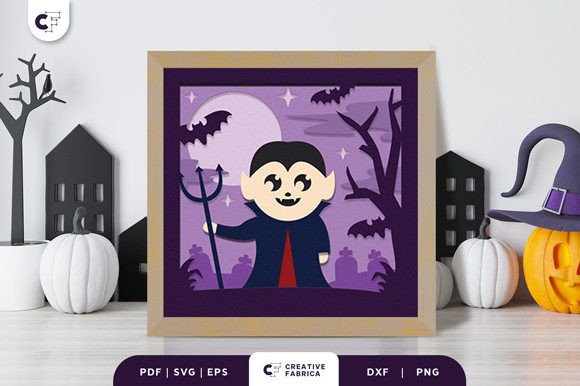
The core concept behind this specific design is the subversion of traditional vampire tropes. While vampires are historically associated with fear and gothic horror, this asset pivots toward amusement. The focal point is a "cute" vampire character featuring silly expressions, funny poses, and quirky accessories. This approach broadens the appeal significantly, making the final product suitable for family-friendly environments, classrooms, or retail spaces that wish to celebrate the holiday without invoking genuine terror. The design places this character against a backdrop of a haunted castle with flying bats, creating a narrative scene rather than a static image.
Technical Specifications and File Versatility
For professionals integrating this into their workflow, the technical delivery of the asset is just as important as the visual design. The Halloween Vampire Kid 3D Shadow Box is provided in a comprehensive suite of file formats: SVG, PDF, EPS, PNG, and DXF. This variety ensures compatibility across different hardware and software ecosystems. Users operating Cricut or Silhouette machines will find the SVG and DXF files essential for precise cutting paths, while graphic designers using Adobe Illustrator or CorelDRAW may prefer the vector scalability of EPS or PDF files. The inclusion of PNG suggests utility for digital mockups or preview purposes before physical production begins.
The design is engineered with nine distinct layers. In the realm of papercraft, layer count is a direct indicator of depth and visual complexity. A nine-layer structure allows for significant parallax effects when viewed from an angle, giving the shadow box a genuine three-dimensional quality that flat prints cannot achieve. The specified dimensions are 20.32×20.32 cm (approximately 8x8 inches), a standard size that fits readily available square frames. This standardization reduces friction for the user, eliminating the need to custom-order framing materials.
Production Workflow and Material Considerations
Executing this project requires a methodical approach to assembly. The instructions outline a clear process: download the design, print on hard paper, cut using a machine, and then proceed with sequential layering. The success of the final piece hinges heavily on material selection. The documentation recommends Encore Cardstock 80 lb cover (216 gsm). From a practical standpoint, this weight is critical. Lighter papers may warp under the weight of multiple glued layers or fail to hold the structural integrity required for the spacing between elements. Heavier cardstock provides the necessary rigidity to maintain the 3D effect without sagging over time.
The assembly process involves placing the last layer of the 3D design into the frame first, then adding subsequent layers on top with adhesive. This reverse-engineering of the stack is vital for ensuring that the foreground elements sit correctly relative to the background. Users must exercise precision here; misalignment in early layers can compound, causing the final image to look skewed. Using a strong, fast-drying adhesive is recommended to prevent shifting during the curing process. Once all layers are secured, the box is sealed, completing the enclosure.
Market Viability and Audience Fit
Who benefits most from acquiring the Halloween Vampire Kid 3D Shadow Box? The primary audience includes hobbyists looking for engaging weekend projects, but the potential extends further. Educators can utilize this design for art classes, teaching students about depth, layering, and spatial reasoning. Small business owners, particularly those selling handmade goods on platforms like Etsy or at local craft fairs, can use this asset to produce inventory. Because the file is digital, the marginal cost of producing additional units is low, limited only by the cost of paper and frames.
For marketers and content creators, this type of project serves as excellent visual content. The process of building the shadow box can be documented for social media reels or blog tutorials, driving engagement through "behind-the-scenes" storytelling. The whimsical nature of the vampire character makes it highly shareable, potentially increasing brand visibility during the peak Halloween shopping season.
Quality Assessment and Realistic Expectations
When evaluating the quality of such digital assets, consistency is key. The design relies on the user's ability to execute the cut and assembly accurately. While the digital file provides the blueprint, the final aesthetic is influenced by external factors. As noted in the product details, images served as previews may differ slightly from the final output due to lighting sources and the specific color of the paper chosen. This is a standard limitation in physical crafting; a white cardstock will yield a different mood than a cream or black one. Professionals should account for this variability when planning their product photography or setting customer expectations.
The strength of this asset lies in its flexibility. Unlike a finished product shipped from a warehouse, this design allows for customization. A creator could swap the suggested orange and black palette for neon colors to match a specific party theme, or use metallic cardstock for a more upscale look. However, this flexibility demands a higher level of skill from the user. Those unfamiliar with layering techniques or precise cutting may find the nine-layer assembly challenging. It is not an instant decoration but a project requiring time and attention to detail.
Long-Term Value and Storage
Beyond the immediate holiday use, the durability of the Halloween Vampire Kid 3D Shadow Box depends on the materials used. High-quality 216 gsm cardstock, when kept away from direct sunlight and moisture, can last for years. This makes it a viable candidate for annual reuse, offering better long-term value than disposable plastic decorations. For storage, the framed nature of the project protects the internal layers from dust and crushing, provided the frame itself remains intact. This preservation capability is a significant advantage for collectors or families who rotate seasonal decor annually.
It is also worth noting the commercial implications of the file formats. Having access to vector files (SVG, EPS, DXF) means the design can theoretically be resized, though users must be cautious. Enlarging the design beyond the intended 20.32 cm scale without adjusting the layer spacing could result in a loss of the intended 3D proportion. Conversely, shrinking it might make the intricate cuts too delicate for standard cardstock. Sticking to the recommended size ensures the structural balance intended by the designer.
Final Recommendations for Implementation
For those considering this asset, the decision should rest on your willingness to engage in the fabrication process. If you seek a quick, out-of-the-box solution, this may not be the ideal fit. However, if your goal is to create a unique, high-quality ornament that demonstrates craftsmanship, the Halloween Vampire Kid 3D Shadow Box offers a robust foundation. The combination of a charming character design, versatile file formats, and a structured layering system makes it a reliable choice for a wide range of creative applications.
To ensure the best results, invest in the recommended 12×12 Cardstock Shop materials or equivalent heavy-weight paper. Take your time during the gluing phase to ensure clean lines and proper depth. Whether used for personal home decor, educational purposes, or commercial resale, this design provides a solid framework for a successful Halloween project. By understanding the requirements and leveraging the flexibility of the digital files, creators can produce a finished piece that is both fun and visually striking, perfectly capturing the spirit of a modern, amusing Halloween.