Elevating Your Digital Presence with 20 Isometric Ramadan 3D Design Elements
The visual landscape of digital marketing and content creation is shifting rapidly. As audiences become more discerning, the flat, two-dimensional graphics that dominated the early social media era are giving way to richer, more immersive experiences. In this context, the 20 Isometric Ramadan 3D Design Element collection represents a significant leap forward for creators looking to capture attention during the holy month. These assets are not merely decorative; they are strategic tools designed to bridge the gap between traditional Islamic values and modern aesthetic expectations.
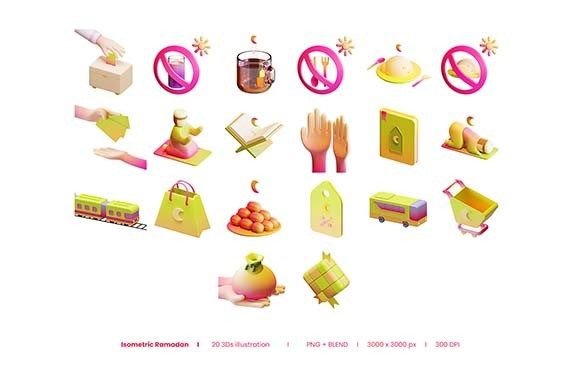
When we discuss the relevance of high-quality 3D assets in today's workflow, we are talking about efficiency and impact. The modern creator—whether a freelance graphic designer, a social media manager for a retail brand, or an educator developing digital curriculum—needs resources that are ready to deploy but distinct enough to stand out. This specific collection addresses that need by offering a curated set of 20 Isometric Ramadan 3D Design Element Feature PNG files transparent background JPEG files 3000 x 3000 pixel 300 dpi. The technical specifications here are crucial. A resolution of 3000 x 3000 pixels at 300 DPI ensures that these images remain crisp whether they are displayed on a retina smartphone screen or printed on a large-format banner for a community event.
The Evolution of Islamic Visual Identity in the Digital Age
For decades, visual representations of Ramadan and Eid were often limited to specific color palettes of green and gold, relying heavily on intricate arabesque patterns and calligraphy. While these elements remain timeless, the digital age demands versatility. The evolution toward isometric design reflects a broader trend in user interface (UI) and user experience (UX) design, where depth and perspective help users navigate information more intuitively.
Incorporating a 3d isometric icon of fasting or a stylized representation of iftar allows brands to communicate complex ideas quickly. For instance, a food delivery app can use an isometric illustration of a date and water setup to signal "Iftar Ready" without needing excessive text. This visual shorthand respects the user's time and aligns with the fast-paced consumption habits of modern audiences. The shift is not about abandoning tradition but rather presenting it through a lens that feels contemporary and accessible to younger demographics who have grown up in a 3D-centric digital environment.
Furthermore, the inclusion of diverse themes such as mudik (the annual homecoming tradition), Quran recitation, and zakat distribution highlights the multifaceted nature of the season. It acknowledges that Ramadan is not just about abstaining from food; it is a holistic period involving travel, spiritual reflection, and charitable giving. By utilizing assets that cover this full spectrum, content creators can tell more complete and resonant stories.
Technical Precision Meets Creative Flexibility
One of the most frustrating aspects of sourcing stock imagery is dealing with inconsistent file formats and poor resolution. Many free resources offer low-resolution JPEGs with white backgrounds that require tedious editing to remove. This collection solves those pain points by providing Feature PNG files transparent background. The transparency is a game-changer for workflow efficiency. It allows designers to layer these 3D elements over various backgrounds—be it a solid color, a gradient, or a photographic texture—without worrying about unsightly white halos or mismatched edges.
The availability of both PNG and JPEG files offers flexibility depending on the end use. PNGs are ideal for web overlays, app interfaces, and social media stories where transparency is key. Conversely, the high-resolution JPEGs are perfect for static posts, email headers, or print materials where file size optimization is less critical than color fidelity. The 300 DPI standard ensures that if a business owner decides to print flyers for a local mosque event or create merchandise for an Eid Al Fitr sale, the output will be professional grade.
Consider the practical application for an e-commerce entrepreneur. During the rush of Ramadan, time is money. Instead of commissioning a custom 3D artist—a process that can take days or weeks—they can instantly integrate a 3d isometric icon of pray into their website's landing page. This immediate deployment capability allows businesses to stay agile, launching campaigns that feel timely and relevant without the overhead of custom production.
Strategic Applications Across Industries
The utility of the 20 Isometric Ramadan 3D Design Element pack extends far beyond simple decoration. Different sectors can leverage these assets to meet specific business objectives and engage their unique audiences.
- Corporate Communications: HR departments and internal comms teams can use these visuals to create engaging newsletters or intranet banners that acknowledge the holiday, fostering an inclusive workplace culture. An isometric image of colleagues sharing an iftar meal can humanize corporate messaging.
- Education and EdTech: Educators creating online modules about Islamic culture can use the Quran and zakat icons to make lessons visually stimulating for students. The 3D style appeals to digital-native learners, making abstract concepts more tangible.
- Non-Profit and Charity: Organizations focused on zakat collection can use the specific charity-themed icons to build trust and clarity in their donation drives. Clear, professional imagery suggests transparency and professionalism, which are vital for donor confidence.
- Lifestyle and Travel: With the inclusion of mudik elements, travel agencies and logistics companies can create targeted campaigns addressing the surge in travel demand. Visualizing the journey home in a warm, inviting 3D style can evoke strong emotional connections.
For bloggers and influencers, these elements provide a cohesive visual identity. Consistency is key to building a personal brand. By using a unified set of isometric assets throughout an Eid Mubarak campaign, a creator establishes a recognizable style that followers associate with their content. This consistency helps in cutting through the noise of crowded social media feeds.
Adapting to Changing User Expectations
Why is there such a heightened focus on 3D isometric designs right now? The answer lies in changing user expectations. Modern internet users are accustomed to high-fidelity graphics found in video games and advanced mobile apps. Flat design, while clean, can sometimes feel sterile or generic. Isometric design offers a "best of both worlds" scenario: it retains the clarity and readability of flat design while adding the depth and tactile quality of 3D rendering.
This style also performs exceptionally well on mobile devices. The clear lines and distinct angles of isometric art remain visible even on small screens, ensuring that the message is not lost on the primary device used for consuming content today. When a user scrolls past a feed filled with standard photography, a well-crafted 3d isometric icon of fasting can act as a pattern interrupt, causing them to pause and engage.
Moreover, the global nature of the digital economy means that content often crosses cultural borders. Isometric art has a universal appeal; it is modern and tech-forward, making it an excellent medium for introducing Islamic traditions to non-Muslim audiences in a way that feels approachable and contemporary rather than archaic.
Best Practices for Implementation
To get the most out of the 20 Isometric Ramadan 3D Design Element Feature PNG files transparent background JPEG files 3000 x 3000 pixel 300 dpi collection, creators should adhere to a few best practices. First, consider the lighting and color harmony of your overall design. While these assets are self-contained, they should complement your brand's existing palette. If your brand uses cool tones, you might adjust the shadow settings or overlay filters to ensure the warm tones of a lantern or date do not clash.
Second, avoid clutter. The beauty of isometric design lies in its structured geometry. Overloading a single composition with too many elements can dilute the impact. Use the Quran icon as a focal point for a spiritual post, or the iftar spread for a culinary feature, but give each element room to breathe. White space is just as important as the graphic itself.
Finally, think about animation. While these are static files, the isometric perspective lends itself beautifully to subtle motion graphics. A slight hover effect on a website button featuring a 3d isometric icon of pray or a gentle floating animation for a social media story can add an extra layer of engagement. Many design tools allow you to import these PNGs and apply basic movements, transforming a static asset into a dynamic interaction.
Conclusion: A Resource for the Modern Creator
In conclusion, the 20 Isometric Ramadan 3D Design Element collection is more than just a set of images; it is a reflection of where digital design is heading. It acknowledges the importance of cultural specificity while embracing the technological advancements that define our current creative workflows. For professionals ranging from marketers to educators, these assets offer a practical solution to the challenge of creating high-quality, culturally relevant content under tight deadlines.
By integrating these high-resolution, transparent, and versatile elements into your projects, you are not only enhancing the aesthetic appeal of your work but also demonstrating a commitment to quality and inclusivity. Whether you are preparing for the spiritual introspection of Ramadan or the celebratory joy of Eid Al Fitr, having the right visual tools at your disposal ensures that your message is delivered with clarity, impact, and respect. As we move forward, the fusion of tradition and technology will continue to shape how we connect, and resources like these are at the forefront of that exciting evolution.